
Legacy & Historical Importance
- Home
- Legacy
Enduring Impact
Contribution to Tribal Freedom Movement
Rando Manjhi’s contribution to the tribal freedom movement extended far beyond immediate resistance. He transformed scattered discontent into organized unity, inspiring tribal communities to defend their land, dignity, and cultural identity against colonial interference. By reinforcing traditional governance systems and mobilizing collective action, he strengthened the moral and strategic foundation of the movement. His leadership demonstrated that tribal resistance was not merely a reaction to oppression, but a conscious assertion of autonomy and self-respect. Through courage, organization, and cultural conviction, he left a lasting imprint on the broader struggle for indigenous rights and self-determination, shaping the legacy of tribal resistance for generations to follow.Lorem ipsum dolor sit amet, consectetur adipiscing elit. Ut elit tellus, luctus nec ullamcorper mattis, pulvinar dapibus leo.
Tribal Unity
United scattered villages under collective purpose, strengthening resistance through shared identity and determination.
Cultural Defense
Protected Santhal traditions, language, and customs from erosion under colonial administrative pressure.
Land Protection
Defended ancestral lands against exploitation, safeguarding livelihood, heritage, and community survival.
Honored Legacy
Cultural & Regional Recognition
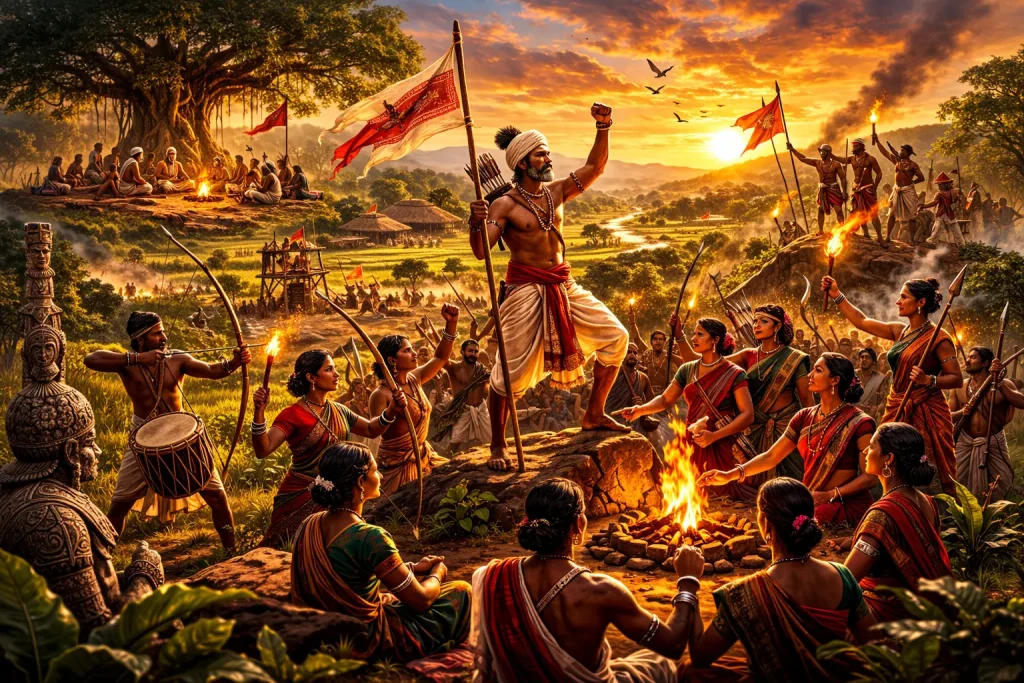
Rando Manjhi’s legacy continues to resonate deeply within the cultural memory of the Santhal community and the broader regional landscape. His role in defending tribal dignity and resisting external domination has earned him lasting recognition as a symbol of courage and self-determination. Over time, his contributions have been remembered not only through oral traditions but also through public acknowledgment in cultural gatherings, educational discussions, and local commemorations. His name remains associated with strength, unity, and the protection of indigenous identity.
Within the region, his leadership is often reflected in collective remembrance during tribal festivals and community events. These occasions reinforce pride in ancestral struggles and serve as opportunities to educate younger generations about their heritage. Through storytelling, songs, and symbolic tributes, communities preserve the narrative of resistance and resilience that defined his era. This living tradition ensures that recognition is not limited to monuments or written history but remains actively woven into cultural life.
Regional awareness of tribal resistance movements has gradually grown, bringing greater appreciation for leaders like Rando Manjhi who defended local autonomy during challenging historical periods. Scholars, historians, and cultural institutions increasingly acknowledge the importance of indigenous perspectives in shaping the broader freedom narrative. His story contributes to a more inclusive understanding of regional history—one that recognizes the sacrifices and leadership of tribal communities alongside other movements.
Recognition also extends to the moral example he set. His commitment to justice, community welfare, and cultural preservation has positioned him as a guiding figure for ongoing discussions about indigenous rights and heritage protection. In this way, his legacy transcends the historical moment of resistance and becomes part of a continuing dialogue about identity, self-governance, and dignity.
Honored Legacy
Cultural & Regional Recognition
Rando Manjhi’s leadership left a lasting imprint on subsequent Santhal and broader tribal resistance efforts. His approach to unity, cultural preservation, and organized mobilization became a reference point for later movements seeking to defend indigenous rights. By demonstrating that collective strength could challenge external domination, he helped shape a mindset of resilience that endured beyond his own time.
Rando Manjhi’s courage motivated future tribal leaders to organize communities with unity, discipline, and cultural conviction. His example demonstrated that resistance rooted in identity and collective strength could challenge external domination and preserve indigenous dignity.
Rando Manjhi’s courage motivated future tribal leaders to organize communities with unity, discipline, and cultural conviction. His example demonstrated that resistance rooted in identity and collective strength could challenge external domination and preserve indigenous dignity.
Rando Manjhi’s courage motivated future tribal leaders to organize communities with unity, discipline, and cultural conviction. His example demonstrated that resistance rooted in identity and collective strength could challenge external domination and preserve indigenous dignity.